Learn interview Questions and answers simply.Anyone who ever goes to interview for getting a job are having fear,nervous.After learning this following skills-Top 10 interview questions,Interview tips,interview skills etc.,these topics can change your life.The most common interview questions with simple best answers are here.Tips and Tricks on how to prepare to attend a job interview with questions and answers without having afraid.Interview questions,skills,tips were given professionally. INTERVIEW QUESTIONS AND ANSWERS: GROUP DISCUSSIONS

Learn interview Questions and answers simply.

Showing posts with label GROUP DISCUSSIONS. Show all posts

Tuesday, 13 September 2016

GROUP DISCUSSION | What You Should Avoid in Group Discussion

GROUP DISCUSSION – WHAT YOU SHOULD AVOID
group discussion
What you should avoid doing in  G.D:   

·    Being shy or nervous because all others in the group are your equals, not seniors.
·       Interrupting a participant before his arguments are over.
·       Being frivolous, for group discussion Is a purposeful activity.
·       Getting emotional and criticizing others without first offering valid arguments in favour of your viewpoint.
Share:

What You Must do in Group Discussion

GROUP DISCUSSION – WHAT YOU MUST DO
must do in group discussion

     What you must do in G.D:  

·       Keep to the point.
·       Make original points and back them by substantial reasoning and not an unfounded opinion.
·       If some other member has already made the point you wanted to make, do not worry. Even here, you can either support or oppose the point by sound reasoning, or add some additional information that might have been left out.
·       Listen to the other participants patiently, attentively and carefully and make a mental note of what they say. If their points are good, readily accept them but with reasoning, and not by just saying “I agree with the views of so and so”. If you find their arguments not acceptable, do not just say “I do not agree with the views of so and so”, instead bring in your own strong arguments to refute them.
·       Whatever you say must be with a logical flow. State you position, give a reason for your holding so and validate it with an example as far as possible.
·       Make only accurate statements.
·       Modulate the volume, pitch and tone of your voice so as to suit the nature of your point.
·       Show flexibility in your views. Don’t hesitate to accept criticism. If someone points to flaws in your argument, do not feel offended or insulted. Instead, change your original opinion willingly, if proved wrong.
·       Be considerate to the feelings of others. It being a friendly discussion, co-operation, not confrontation, is a must. You need not shout at others. Use polite and parliamentary language. If someone has not spoken and wishes to say something, you can request others to give him a chance. Your helpful, accommodative and encouraging attitude will surely be appreciated by the examiner.
·       If possible, make an attempt at initiating the discussion. But try to make a good job of it by offering a general introduction to the topic and briefly laying the scope of the discussion. Even if you could not be the first speaker, try to get an opportunity as early as possible, for it is absolutely essential that you talk and express your views. Not only this, you must talk as much as possible, effectively and sensibly, to impress others.
·       If you have reasonable doubts, you can ask questions from others and, if necessary, seek clarifications.
·       Try to get your turn. Don’t think someone else will offer you an opportunity to speak.
·       As soon as you find your argument has been refuted by someone else, you must try to justify your point of view by bringing in fresh ideas or arguments.
·       If more than one candidate starts speaking simultaneously. You can request for order and appeal for co-operation. Taking lead in such situations shows your coordinating ability.
·       Be an active and interested participant. Remain cheerful, smiling and alive to whatever is going on in the group.
·       Listen to the initial briefing of the GTO/examiner carefully. Grasp and understand correctly the topic given for discussion.
·       While speaking, address to the whole group, looking each participant in the eye in turn.
·       Be attentive to the person who is speaking and make sure that you are looking at him.
·       Talk with confidence and self-assurance as a mature person would do.
·       Sit straight and upfront. To emphasize your point, make use of hands and facial expressions.
·       If the discussion is straying from the expected course, take the initiative of bringing it back on track by gibing a new directional point.
·       What you say must be audible and clear to the group. So, speak slowly, deliberately and without rushing your works.
·       Your voice must be crisp, energetic and forceful so as to gain the attention of the group. Be assertive without being a bully.
If the discussion is stucking on one point for too long, the quality will definitely suffer. In such a case try and move the discussion forward by highlighting a new aspect or angle to it.
Share:

Group Discussion - Introduction

GROUP DISCUSSION - INTRODUCTION
group discussion introduction

 
 Meaning:
Group discussion, as the term itself suggests, is a discussion by and among a group of people. The group has between 8 and 12 members who express their views, freely, frankly and in a friendly manner, on a topic of current and controversial nature. The topic is given on the appointed date, and, hence, the conversation that follows is a spontaneous chit chat, not a pre-planned one. Here, within a time limit of 20 to 30 minutes, the abilities of the members of the group are measured in an unobtrusive manner by the examiner who does not actively participate in the discussion.

Features of Group Discussion:  Used as a fruitful method in selecting            suitable candidates for top jobs, group discussion has the following salient features:
·        Group discussion is, unlike interview, many on many conversation which is not pre-planned and is spontaneous. Here, any interesting topic may be given to judge your public speaking talent.
·        Unlike a formal debate where one is supposed to speak only for against the motion, one by one, and within a definite time limit allotted by the President or Chairman, a group discussion follows an informal approach. The participants are free to speak in favour or against the subject, be neutral or explain the merits or demerits, advantages and disadvantages of the topic under discussion.
·        The discussion revolves around a specific subject given by the GTO or examiner, no doubt, but he does not interfere once he announces the subject. Instead, he recedes to the background watches the group behavior therefrom, and the group members immediately start discussing the topic informally.
·        In a group discussion we witness cordiality, friendliness, informality and free atmosphere. Normally, the age, educational qualifications, background, experience and aptitude of the candidates being the same, they have no fear or complexes and thus it becomes easy to assess their natural group behaviour.

Utility of Group Discussion:
·        Speaking in a group enables you to shed your shyness, nervousness and inhibitions.
·        You get to learn many new things and thus your field of knowledge is expanded.
·        Your thinking is stimulated. Discarding your prejudices and emotions you learn to think objectively, where irrelevant ideas have no place.
·        A group discussion helps you cultivate the qualities of self-confidence, mental alertness, self-assertion but without offending the feelings of others ability to discuss a subject without losing your temper, power of reasoning and ability to refute arguments offered by others without allowing any unpleasantness or ill-feeling and disagreeing with grace; event changing your original ideas during the course of the discussion if required in the light of facts and figures provided by the other speakers/participants.
·        You get to know other members of the group, understand your strengths and weaknesses and thus assess yourself in relation to others forming the group.
·        Your true personality is revealed and qualities of leadership crystallize. If you have initiative and tact, know the subject well and have self-confidence, you grab the opportunity to start the discussion and automatically assume the role of a natural leader.

·        Lastly, it provides you a wholesome entertainment in which all others too are equally entertained.


To Know More About Group Discussion Topics:

Share:

General Method of Group Discussion

GROUP DISCUSSION – GENERAL METHOD

 General Method of  G.D:
 

·        Normally a group limited to 8 to 10 members is seated comfortably around a table in a semi-circle. The group leader, if any, takes his place in the centre, facing all candidates.

·        They are assigned different serial Nos. viz. 1, 2, 3, etc. and are normally addressed as Mr. No. 1, 2, etc. and not by name.

·        They have to wear their number tags all the time so that the examiner may note down their points accordingly.

·        The examiner or the testing officer instructs them not to disclose their names, speak in any other language than in the one prescribed, mostly English, for the discussion but he does not decide who should speak first and how much time each candidate should take.

·        Sometimes the candidates are themselves allowed the freedom to choose the topic but generally they have to select out of 2 or 3 topics suggested by the examiner.

·        Generally the subjects for discussion are either light hearted ones like love marriages versus arranged marriages or serious ones like India’s Economic Policy or current ones like “war against terrorism, post September 11, 2001 attack on World Trade Centre and Pentagon.

·        Most often than not, the examiner retires to the back ground, so that the candidates may not see him and he assesses their personality and group behavior during the G.D. exercise.

A group discussion can be conducted by different methods which depend on the following two most important factors.

1.     If the level of intelligence of the group is comparatively low and the aim is teaching and learning, the discussion is held under the guidance of a group leader who selects a suitable subject in which the members of the group are interested. He seats the participants around him and announces the subject orally or writes on a blackboard. Discussion may be opened in the following ways:

·        If the subject is simple and familiar to the participants, the group leader puts questions on the subject to them and a discussion ensues.

·        If the subject is somewhat difficult or uncommon, the group leader gives a short introductory talk, explaining both sides of the question without being partisan, and he then asks the members to express their views thereon. A discussion thus follows: The group leader has to be an expert in this case and has to control the discussion.

2.     If the level of intelligence of the participants is high and the aim of discussion is to test the knowledge and power of verbal expression of the group, the person conducting the discussion announces the subject to the group, asks them to express their views , and he himself retreats to the background and watches the discussion. Here he does not perform the role of a leader. 
Share:

Sunday, 7 August 2016

GROUP DISCUSSION TOPICS - Present Education System in Our India?


Introduction:


Present Education System in Our India?

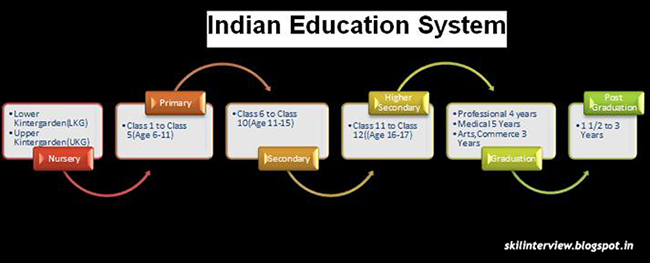
In this group discussion topic you can learn what the professional terms are used in this and this convention is most commonly asked in interview. The topic name is "Should We Change the Present education System in Our India" This gd topic is about our country India development and this open discussion topic for B.Tech students and it is for education students. This rap session, symposium, workshop, open table meeting ,convention is between you and your interviewer or teacher. After you read this topic you can learn our present cultural, educational, academic, broadening system in our country India and hope that it is useful for your interview.

GROUP DISCUSSION TOPICS

  • Should We Change the Present Education System in Our Country?
    Present Education System in Our India?

(A).Yes, we should.

·      The present system of education, Introduced two hundred years ago by our British masters to suit their requirements, has out lived its utility and hence must be replaced with a new one to answer the expectations of the 21st century. We no longer need just cheap clerks who could speak and write English during the British rule and did the pen pushing for them so that they did not have to import high salaried clerks from England. We instead need to equip our future citizens with the knowledge and capability to realize their potential to the fullest extent possible and produce more--both physically and intellectually.
·      Our present system of education places undue and overemphasis on cramming or learning by rote. The more facts and figures you can remember and produce in the examination, the more intelligent you are supposed to be. Your creative imagination is not allowed to develop and of you do happen to show creativity, it is smothered by deducting your marks. What is more, our students are still being taught old, unrevised historical data and scientific researches. For example while England, France and Iran have changed their languages to keep in touch with the present, we are still continuing with the same literature in them as we did a hundred years ago.
·      Our present system of education does not test the real worth or agility of a person, nor does it encourage him to inculcate true knowledge from his own experience. It , instead measures a man's capability by suitable answers to just a few questions from his syllabus in the examination hall . Is, them, such a system not bogus artificial or unreal? Should, then, we not get rid of this system altogether and have a new one ?
·      The purpose of education is said to bring out the best possible in a man so that he develops himself to the fullest potential. But what do we witness today ? Our new generation of students does not respect parents and teachers, indiscipline is rampant, and youth, in the absence of any  worthwhile technical education that can assure him to earn is livelihood and lead and honorable life, is frustrated and engages in anti-social activities. Therefore, we should scrap such deleterious education system lock, stock and barrel and introduce a new one in its place that suits the needs and requirements of our populous, resource-rich and forward-looking nation.

     (B).No, we shouldn't.

·      The present Education system has served us well for two hundred years and there is , therefore no point in replacing it with another lest we should fall from the frying pan into the fire. The so called defects we talk of are there in any education system. Moreover, the fault lies more with ourselves who did not implement the system for the food of all and not with the system as such.
·      Ever since we got our independence from the British , there has been demand and efforts to replace the existing education system with a new one but none was found to be a match to the present system, so painstakingly evolved by our former masters. Doesn't it appear, then, that we criticize our education system just for the sake of criticism and not with any constructive and positive approach in mind.
·      We can't blame our student community or the present education system for indiscipline or disrespect among our students. The blame lies elsewhere--with our teaching community which , devoid of any missionary zeal to tend its students, thinks only in mercenary terms.
·      This alone is the practical solutions to all our problems with the education system.

Share:

GROUP DISCUSSION TOPICS - What is Desirable, Love or Arranged marriage?


Introduction:
In this group discussion topic you can learn what the professional terms are used in this and this gd topic is most commonly asked in interview. The topic name is "What is Desirable, Love marriage or arranged marriage" This gd topic is about on marriage and this group discussion topic for B.Tech students and it is for education students. After you read this topic you can learn so many content and hope that it is useful for your interview.

GROUP DISCUSSION TOPICS


  •  What is Desirable, Love marriage or Arranged marriage?
    Group Discussion Topics


(A).In Favour of Love marriage.

·      Young people should be allowed to choose their own partners because nature has so made them that upon reaching the age of consent young boys and girls feel naturally attracted towards the member of opposite sex whom they find to be Mr. Right or Miss Right for themselves.
·      In arranged marriages, Parents are not in a position to know the girl well enough-that is, they may not be aware of her personality traits that is of paramount importance for such life-long relationships, In arranged marriages. we generally get to know about the family background and outward appearance of the girl or the boy , their educational attainments, career plans, etc. and in the case of girls, their interest and proficiency in household affairs--cooking, knitting, tailoring, etc. But success or failure of married life depends on the basic temperament , nature and compatibility or otherwise of the partner. Therefore, to make marriage a success, young men and women should be supported in selecting partners of their choice suiting each others temperament.
·      Love is the main factor that binds two individuals. It has been praised y saints and poets alike. Therefore, love marriages have more chances of success because there is pre-marital understanding between the would - be couples. More often, unpleasant consequences arise only when a love is obstructed or the period of courtship is very short, If the love is given way to and the latter is taken care of, love marriages succeed as nothing else.

     (B).In Favour of Arranged marriage.

·      The much talked of understanding in love marriages is not so easy to have when the two meet for the first time because love takes place "at first sight" and not after due deliberation. Moreover, love marriages mainly result in divorce or are the cause of quarrels with parents and thus unpleasantness in relationships. As against them, arranged marriages are based on more solid foundations, Here, experiences people have their more faithful, devoted, mature and of predictable behaviour. Therefore, we should go in for arranged marriages to enjoy real marital bliss.
·      Arranged marriages are always preferable to love marriages. Parents are more rational, mature and experienced to deal with such matters and they are always capable of selecting suitable life partners for their children. Love being blind, young people usually do not give a thought to the suitability and compatibility of their love. They generally lack sound judgment and are carried away by passion.
·      All this new found love for love marriages is because of the influence of western films and culture on our life. Whether love or arranged one, marriage is a gamble either way. Even much trumpeted love marriages have been seen to be laundering on the rock of reality. Hadn't our fathers, grandfathers and their forefathers all enjoyed arranged marriages? Is our culture or society any the worse it?
·      If we compare both love and arranged marriages we find that chances of success in the latter are much more for they are finalized after due consideration of various aspects of a happy and successful married life.

Share:

Amazon

Adsense

@skillinterview. Powered by Blogger.

Labels

Contact Form

Name

Email *

Message *

Subscribe to Email Updates

INTERVIEW QUESTIONS

 
Tricks and Tips